Table of Contents >> Show >> Hide
- What “Without Soil” Really Means
- Soilless Basics You’ll Keep Using (No Matter the Method)
- 1) Grow Cuttings in Water (“Vase Farming”)
- 2) The Kratky Method (Passive Hydroponics with Zero Pumps)
- 3) Deep Water Culture (DWC): The “Bubbly Spa” for Roots
- 4) Aeroponics: Roots Hanging in Air (Yes, Really)
- 5) Semi-Hydroponics with LECA (Clay Pebbles That Look Cool on Instagram)
- 6) Air Plants & Mounted Epiphytes (No Soil, No Pot, No Problem)
- Quick Comparison: Which Method Fits Your Life?
- Troubleshooting: The 6 Most Common Soilless Problems
- Conclusion
- Real-World Experiences & Lessons Learned (The “Stuff Nobody Mentions Until It Happens” Section)
Soil is great. It’s also messy, heavy, andif you’ve ever knocked over a pot on a white rugemotionally scarring. The good news: plants don’t actually require soil. What they need is a way to get water, oxygen, and nutrients to their roots (or leaves), plus light. Soil is just one delivery system… and not always the cleanest one.
Below are six genuinely doable methods for growing plants without soil, ranging from “I own a jar” easy to “I built a tiny science lab” easy. You’ll get clear steps, plant suggestions, and the most common mistakesso you can skip the heartbreak and go straight to bragging rights.
What “Without Soil” Really Means
When people say “grow without soil,” they usually mean one of two things:
- No dirt at all: Roots sit in water, hang in air, or the plant absorbs moisture through leaves (hello, air plants).
- Inert/soilless media: Roots grow in something that isn’t soillike clay pebbles or rockwoolwhile nutrients come from water.
Either way, you’re replacing soil’s job (holding moisture + nutrients while still letting roots breathe) with a cleaner, more controllable setup. The payoff is often faster growth, fewer pests, and a suspicious sense of power.
Soilless Basics You’ll Keep Using (No Matter the Method)
1) Nutrients are non-negotiable (most of the time)
Plain water works for short-term rooting and for a few hardy plants, but most plants eventually need a complete nutrient source. In hydroponic-style setups, that means a hydroponic fertilizer mixed into water.
2) Roots need oxygen
Soil has air pockets. Water doesn’tunless you design for it. Some methods create an air gap naturally, while others need an air pump. If roots stay waterlogged without oxygen, they can suffocate and rot (plants: dramatic, but fair).
3) Water chemistry matters more than you think
Hydroponic guides commonly recommend keeping nutrient solution slightly acidicoften around pH ~5.5–6.5because that’s where nutrients are most available. You don’t need to become a chemist, but a simple pH kit can prevent a lot of “Why are my leaves doing that?” moments.
4) Light: bright, not blazing
Most indoor soilless grows succeed with bright, indirect light or a basic grow light. A sunny window can work, but watch for overheating or algae growth in clear containers.
1) Grow Cuttings in Water (“Vase Farming”)
This is the gateway method: you clip a stem, put it in water, and feel like a plant wizard by next Tuesday. It’s also one of the best ways to multiply houseplants without spending more money (or admitting you already have 27).
Best plants to try
- Pothos, philodendron, tradescantia
- Spider plant pups
- Many herbs (mint is basically immortal)
What you need
- A clean glass or jar
- Room-temperature water
- Scissors/snips (clean blades matter)
- Optional: a small piece of horticultural charcoal to keep water fresher
How to do it
- Cut below a node (that bump on the stem where roots love to form).
- Remove leaves that would sit underwater (submerged leaves rot = water turns into swamp soup).
- Place in water, keeping the node submerged.
- Put in bright, indirect light.
- Change water every few days (or weekly if it stays clear).
- Once roots are a couple inches long, you can keep it in water long-term (with nutrients) or transition to another method.
Common mistakes (and how to avoid them)
- Cloudy water: Change it more often, use a clean container, and keep leaves out of the water.
- “It rooted, then collapsed”: Some plants struggle when moved from water to potting mix. Transition gently and keep humidity up at first.
- No roots after weeks: Try a fresh cutting, brighter light, or a different plantsome simply don’t love water propagation.
2) The Kratky Method (Passive Hydroponics with Zero Pumps)
If water propagation is the appetizer, the Kratky method is the main coursestill simple, but now you’re growing full plants (like lettuce and herbs) in a container of nutrient solution without air pumps, circulating water, or complicated plumbing.
The magic trick: as the plant drinks, the water level drops and creates an air gap. The plant grows two kinds of roots “water roots” for drinking and “air roots” for breathing. Plants: surprisingly adaptable when the rent is paid in nutrients.
Best plants to try
- Lettuce, leafy greens
- Basil, cilantro, parsley
- Green onions (easy mode)
What you need
- An opaque container with a lid (or wrap it to block light)
- Net pot or DIY “cup” that holds the plant
- Soilless starter media (rockwool, sponge, coco plug, etc.)
- Hydroponic nutrients
How to do it
- Start seeds in a small plug/cube until they have a few true leaves.
- Mix nutrient solution according to the label (don’t freestyle fertilizer like it’s seasoning).
- Fill container so the bottom of the net pot/media is just barely touching the solution.
- Keep the container dark to discourage algae.
- Place under bright light or a grow light.
- Do not keep topping it off to the brim. You want that air gap as the plant grows.
Common mistakes
- Algae explosion: Light + nutrients + water = algae party. Use an opaque container and keep lids snug.
- Overfilling: Kratky needs an air gap. If roots never get air, they can rot.
- Trying it with huge fruiting plants first: Start with greens and herbs. Tomatoes can be done, but learn the basics first.
3) Deep Water Culture (DWC): The “Bubbly Spa” for Roots
Deep Water Culture is hydroponics with one major upgrade: an air pump. Roots sit in nutrient solution full-time, and an air stone bubbles oxygen into the water so roots don’t suffocate. Think of it as a hot tubexcept the guests are lettuce roots and nobody gets kicked out for bringing celery.
Best plants to try
- Lettuce, spinach, arugula
- Basil and other herbs
- Fast-growing greens (most beginners succeed here)
What you need
- A bucket or tote reservoir
- Net pots + starter media
- Hydro nutrients
- Air pump + tubing + air stone
How to do it
- Set up reservoir and cut/fit a lid to hold net pots (or use a floating raft setup).
- Mix nutrient solution; fill reservoir.
- Place seedlings in net pots so roots can reach the solution.
- Run the air pump continuously to keep oxygen high.
- Check water level; top off with water as needed and refresh nutrients periodically.
Common mistakes
- Warm water: Warmer water holds less oxygen and can invite root issues. Keep the reservoir out of direct sun and away from heat sources.
- “My pump died and everything died”: Use a reliable pump, and if you’re serious, consider a backup plan for power outages.
- Ignoring pH: If plants look nutrient-deficient even with fertilizer, pH drift is often the culprit.
4) Aeroponics: Roots Hanging in Air (Yes, Really)
Aeroponics sounds like sci-fi because it kind of is: plant roots hang in a dark chamber while a mister sprays them with nutrient solution on a schedule. It can be incredibly efficient, and it’s a favorite of countertop garden kits because it’s compact and (when dialed in) fast.
Best plants to try
- Herbs and leafy greens
- Seed starting and cloning (rooting cuttings quickly)
- Compact plants that don’t become top-heavy overnight
Two easy entry points
- Countertop aeroponic garden kits: Simplest setup, built-in lights, beginner-friendly.
- DIY tote aeroponics: A plastic tote, net pots in the lid, a small pump + misting nozzles, and a timer.
How to do it (beginner version)
- Keep roots in a dark, enclosed space (light encourages algae and can stress roots).
- Use a timer so misting happens frequently in short bursts (roots should stay moist, not submerged).
- Mix nutrients according to label; keep solution fresh.
- Clean nozzles and the reservoir regularly to prevent clogs and biofilm buildup.
Common mistakes
- Clogged misters: The #1 aeroponics villain. Clean routinely and consider filtration if your water is mineral-heavy.
- Timer issues: If misting stops too long, roots dry out quickly. Test your schedule before leaving town.
- Skipping cleaning: A clean system is a happy system. Aeroponics rewards the tidy.
5) Semi-Hydroponics with LECA (Clay Pebbles That Look Cool on Instagram)
LECA (lightweight expanded clay aggregate) is a popular semi-hydro method for houseplants. Instead of soil, you use clay pebbles in a pot with a small nutrient-water reservoir at the bottom. The pebbles provide support and airflow, while water wicks upward to hydrate roots. Less fungus gnat drama, fewer overwatering mistakes, and a bonus: it looks like modern plant décor rather than “dirt, but inside.”
Best plants to try
- Pothos, philodendrons, monsteras (many aroids adapt well)
- Peace lily (often does well when transitioned carefully)
- Spider plant
What you need
- LECA pebbles
- A container with a reservoir (or a cache pot + inner pot system)
- Hydroponic nutrients suitable for semi-hydro
How to do it
- Rinse and soak LECA to remove dust and pre-hydrate pebbles.
- Remove as much soil as possible from the plant’s roots (be gentleno need to interrogate the root ball).
- Place plant into LECA and add water/nutrient solution to form a small reservoir at the bottom (not drowning the whole root system).
- Top up the reservoir as it drops; flush periodically to prevent salt buildup.
Common mistakes
- Root shock: Some plants drop older “soil roots” and grow new water-adapted roots. Transition during active growth for best results.
- Salt buildup: If you never flush, minerals can accumulate. A regular rinse helps.
- Assuming LECA has nutrients: It doesn’t. You still need to feed the plant.
6) Air Plants & Mounted Epiphytes (No Soil, No Pot, No Problem)
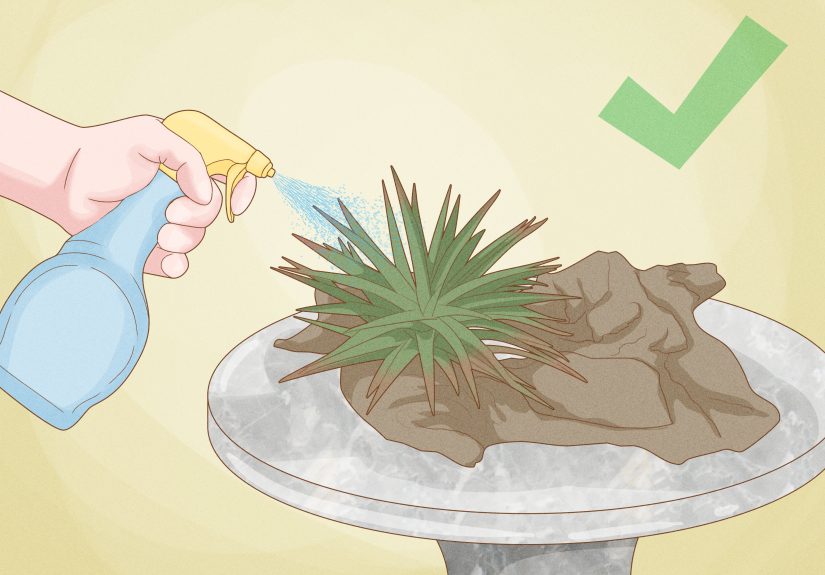
Air plants (Tillandsia) are the ultimate “no soil” flex. They absorb water and nutrients through specialized leaf structures, not through a soil-bound root system. Their roots are mostly for anchoringlike the plant version of a seatbelt.
Many orchids and other epiphytes also naturally grow attached to bark or mounts in the wild, making them great candidates for soil-free displays.
What they like
- Light: Bright, indirect light is usually ideal.
- Water: Many growers succeed by soaking weekly (often 20–60 minutes), then letting plants dry fully.
- Airflow: Crucial. Trapped moisture can cause rot.
- Warmth: Protect from cold temperatures; most don’t appreciate chilly drafts.
How to care for air plants (simple routine)
- Soak the plant in room-temperature water about once a week (adjust for humidity and season).
- Shake off excess water.
- Dry upside down or in a position where water can drain from the base.
- Return to a bright spot with good airflow.
Common mistakes
- Leaving them wet in a terrarium with no airflow: Looks cute, rots fast.
- Misting only: Misting can help, but many air plants do better with an occasional soak.
- Too little light: Air plants can survive in dim spots for a while… like a phone on 2% battery. They won’t thrive.
Quick Comparison: Which Method Fits Your Life?
| Method | Best For | Effort Level | Biggest “Gotcha” |
|---|---|---|---|
| Water propagation | Houseplant cuttings, easy starts | Very low | Stagnant water / slow growth without nutrients |
| Kratky | Herbs & greens with zero pumps | Low | Needs an air gap; algae if light hits water |
| DWC | Fast leafy growth indoors | Medium | Pump reliability + water temperature |
| Aeroponics | Compact high-efficiency growing | Medium | Clogged misters / timer failures |
| LECA semi-hydro | Cleaner houseplant care | Medium | Transition shock; salt buildup if never flushed |
| Air plants & mounts | Decor, low-mess “soil-free” plants | Low | Must dry fully; airflow matters |
Troubleshooting: The 6 Most Common Soilless Problems
1) Algae in the container
If light reaches nutrient water, algae will RSVP. Use opaque containers, wrap clear jars, and keep lids tight.
2) Yellow leaves (but you’re feeding!)
Often a pH issue rather than a fertilizer issue. If nutrients are present but unavailable, plants still look hungry. A basic pH test kit can save weeks of guessing.
3) Root rot smell
Roots need oxygen and clean water. Add aeration (DWC), maintain an air gap (Kratky), and clean reservoirs regularly.
4) Slow growth indoors
Light is usually the bottleneck. A simple grow light can outperform a “kind of bright” window, especially in winter.
5) Salt crust on LECA or containers
Mineral buildup happens. Flush with clean water on a schedule and avoid over-concentrating nutrients.
6) “My plant survived, but it looks… offended”
Transitions take time. Some plants shed old roots and grow new ones adapted to water-based conditions. Be patient, keep conditions stable, and resist the urge to change five variables at once.
Conclusion
Growing plants without soil isn’t a gimmickit’s just a different (often cleaner) way to deliver what plants actually need. Start simple: root a cutting in water, try a Kratky jar of basil, or adopt an air plant and pretend it’s a tiny dragon egg. Once you see success, you can level up to DWC, aeroponics, or semi-hydro with LECA.
The real secret isn’t fancy gear. It’s consistency: clean containers, the right nutrients, enough light, and roots that can breathe. Do that, and you’ll be growing plants without soil like it’s the most normal thing in the worldbecause, honestly, it kind of is.
Real-World Experiences & Lessons Learned (The “Stuff Nobody Mentions Until It Happens” Section)
People who try soilless growing for the first time often expect two outcomes: (1) instant jungle, or (2) instant disaster. The truth is funnier and more humanyour first wins usually come fast, and your first mistakes come faster.
One common “aha” moment is realizing that light control matters as much as plant care. The plant can be perfectly healthy, but if sunlight hits a jar of nutrient water, you don’t just grow basilyou also grow an unsolicited algae smoothie. Many beginners end up wrapping clear containers with paper, tape, or even a sock (which is not a design trend, but it is effective). Once you block light from the reservoir, everything gets calmer: the water stays clearer, the smell disappears, and you stop side-eyeing your plant like it owes you money.
Another very normal experience is learning that roots have personalities. Plants grown in water often develop “water roots” that look different from soil rootsthicker, sometimes whiter, sometimes more delicate. When you transition a plant from soil to LECA, it may drop older roots and grow new ones adapted to the new environment. This can feel like failure (“It’s shedding! It hates me!”), but it’s often just the plant updating its operating system. The people who succeed tend to do one boring thing exceptionally well: they keep conditions steady long enough for the plant to adapt.
There’s also the famous “I followed the nutrient label and my plant still looks weird” phase. This is where many growers discover pH drift. It’s not that the plant doesn’t have nutrientsit’s that the plant can’t access them efficiently if the water chemistry moves out of range. The practical takeaway from experienced growers is simple: when something looks off, check the basics firstlight intensity, reservoir cleanliness, oxygenation (especially in DWC), and water chemistrybefore buying another bottle of “miracle” additive.
Aeroponics beginners often report a different kind of lesson: small clogs cause big drama. A mister nozzle that’s partially blocked doesn’t look like a crisis until roots dry out faster than you expected. That’s why experienced hobbyists treat cleaning like brushing teeth: not glamorous, but skipping it is how you end up regretting your choices at 2 a.m. with a flashlight and a sink full of plant parts.
Air plants come with their own rite of passage: the realization that “misting sometimes” isn’t always enough. Many people upgrade to a weekly soak, then learn the second half of the routine is just as importantdrying thoroughly. The win is when you find the rhythm that fits your home: humidity, airflow, and light. Once you do, air plants become the low-mess, high-charm option they’re famous for.
The most consistent “experienced grower” advice across all methods is surprisingly unexciting: write down what you did. If you change nutrients, move the light, swap containers, and top off water all in the same weekend, you’ll never know what caused improvement (or chaos). The growers who level up fastest treat soilless gardening like a simple experiment: change one variable, observe, repeat. It’s less “plant whisperer” and more “friendly neighborhood scientist”and it works.